
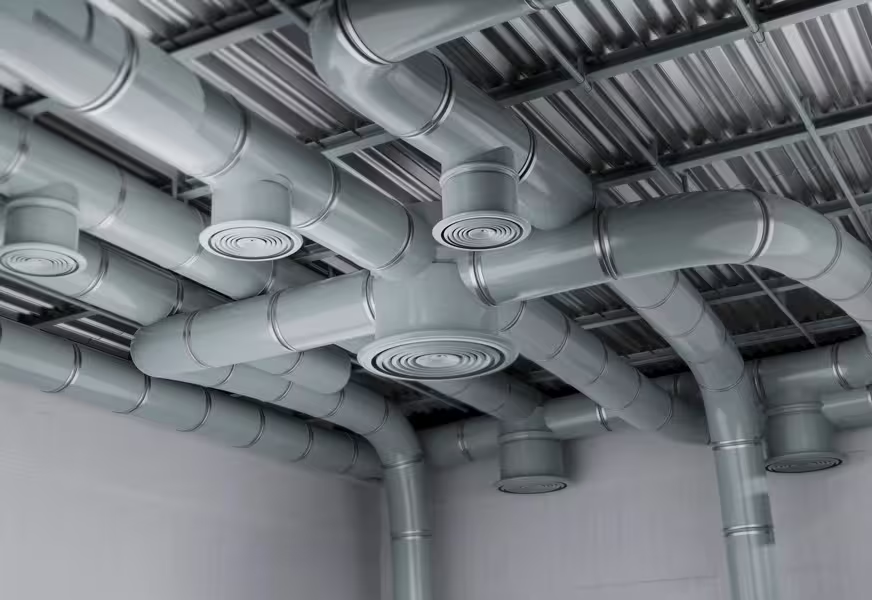
Busduct & Busbar Trunking Systems
Perfect Solution Contracting provides integrated Busduct and Busbar Trunking System (BTS) solutions for commercial buildings, industrial facilities, infrastructure projects, data centers, and other applications requiring reliable high-capacity electrical power distribution.
Busbar trunking systems provide an alternative to conventional power cable distribution for suitable applications. Electrical power is distributed through insulated copper or aluminum busbars enclosed within a protective housing designed according to the selected system and project requirements.
Busduct systems can be used for connections between transformers, generators, low-voltage switchgear, Main Distribution Boards (MDB), and other major electrical equipment. They can also be used for vertical and horizontal power distribution within buildings.
Depending on the application, busbar trunking systems may be configured as feeder or plug-in systems. Feeder busduct is generally used to transfer electrical power between major equipment or distribution points, while plug-in busduct allows compatible tap-off units to distribute power to designated downstream loads.
System selection should be based on the required rated current, operating voltage, number of conductors, conductor material, short-circuit withstand capability, enclosure protection, installation arrangement, environmental conditions, and project specifications.
Busbar trunking systems are available with copper or aluminum conductors depending on the approved design and selected manufacturer. Conductor sizing and system ratings should be coordinated with the calculated electrical load and applicable design requirements.
Short-circuit withstand capability is an important consideration when selecting a busduct system. The rated short-time and peak withstand characteristics of the selected equipment should be coordinated with the calculated fault level at the installation point.
The enclosure and required degree of protection should be selected according to the installation environment. Indoor and outdoor applications can require different enclosure arrangements and IP ratings based on exposure to dust, moisture, water, and other environmental conditions.
A complete busduct installation may include straight sections, elbows, offsets, tees, flanges, end closures, expansion sections, tap-off units, joint assemblies, supports, hangers, and other accessories required by the approved routing and manufacturer's system design.
Joint assemblies are critical parts of a busbar trunking system. Installation should follow the manufacturer's requirements for alignment, joint assembly, tightening sequence, and specified torque values to provide the intended electrical and mechanical connection.
Busduct routing should be coordinated with structural, architectural, mechanical, plumbing, fire protection, and other electrical services. Required clearances, access for joint inspection, tap-off operation, and future maintenance should be considered during coordination.
Supports and hangers should be installed according to the approved shop drawings and manufacturer's requirements. Structural loading, support spacing, vertical runs, horizontal runs, and movement or expansion requirements should be considered as applicable.
Where busduct crosses building expansion joints or where thermal movement requires accommodation, appropriate expansion arrangements should be provided in accordance with the selected manufacturer's recommendations and approved project design.
Earthing and bonding should be coordinated with the complete electrical distribution system. The busduct enclosure, equipment interfaces, and associated metallic components should be bonded and earthed according to the approved electrical design and applicable requirements.
Fire stopping should be coordinated where the busduct penetrates fire-rated walls or floors. Approved penetration sealing systems should maintain the required fire-resistance performance of the building element according to project requirements.
Busbar trunking equipment should be selected and installed according to the approved project specifications, manufacturer requirements, and applicable standards. Depending on the project and selected product, relevant requirements may include IEC 61439-6 or other applicable standards and certifications.
Testing and commissioning should verify the completed installation before energization. Inspection can include mechanical connections, joint torque, insulation resistance, continuity, earthing and bonding, phase identification, installation condition, and other tests required by the approved procedure and manufacturer.
Perfect Solution Contracting provides complete busduct and busbar trunking solutions covering engineering coordination, technical submittals, material supply, routing coordination, supports, installation, termination, jointing, testing, commissioning, and final handover according to project requirements.
- Busduct and Busbar Trunking System (BTS) solutions.
- Feeder busduct systems.
- Plug-in busduct systems and compatible tap-off units.
- Copper and aluminum conductor systems according to approved project requirements.
- High-capacity electrical power distribution.
- Transformer-to-switchgear and switchgear-to-MDB connections.
- Vertical and horizontal busduct distribution.
- Rated-current and voltage selection.
- Short-circuit withstand coordination.
- Indoor and outdoor enclosure selection.
- Straight sections, elbows, offsets, tees, flanges, and accessories.
- Joint assembly and manufacturer-specified torque control.
- Supports, hangers, and routing coordination.
- Expansion arrangements where required.
- Earthing and bonding coordination.
- Fire stopping at rated penetrations where required.
- Inspection, testing, and commissioning before energization.