
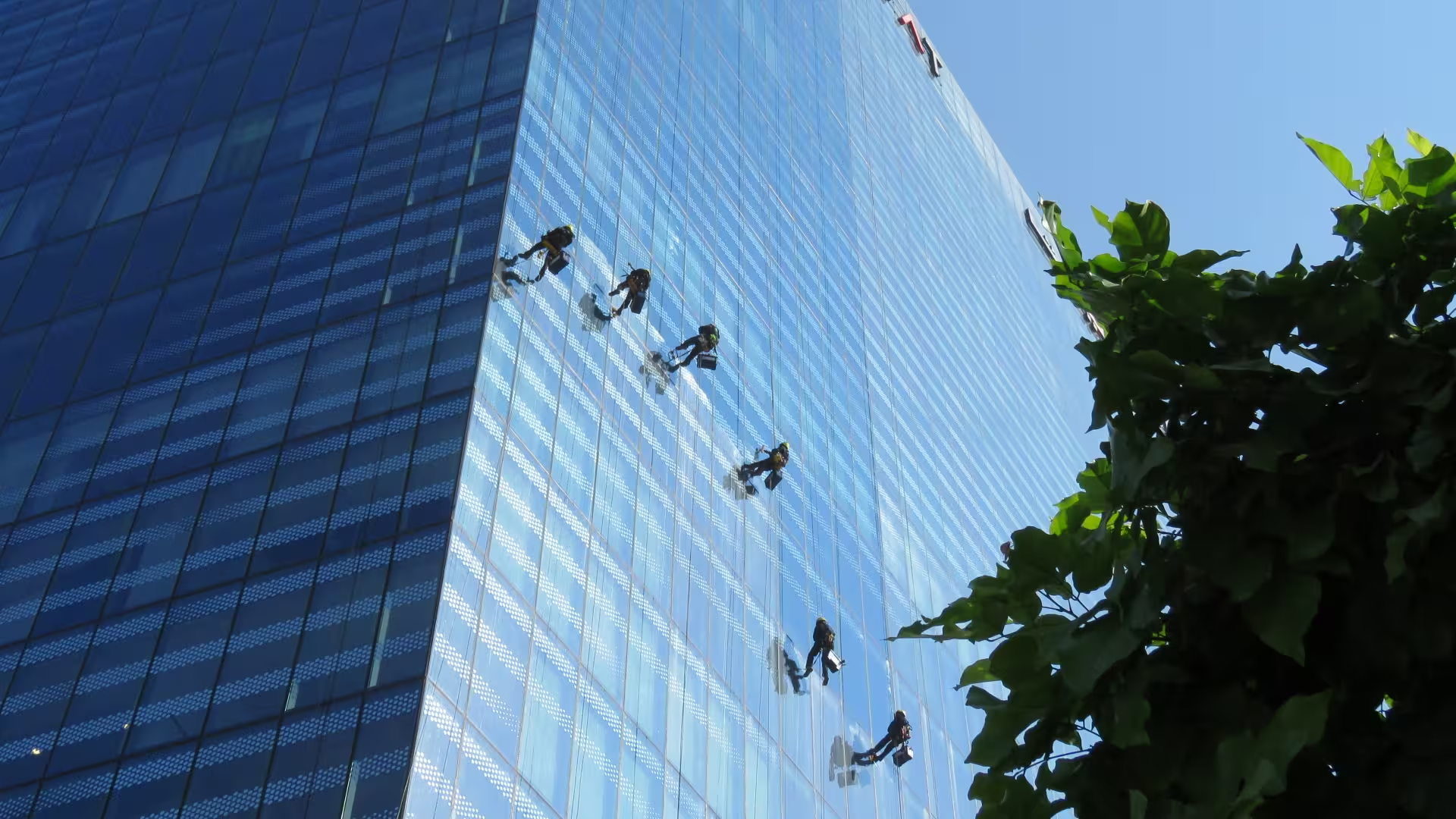
Building Facade Cleaning Services
Perfect Solution Contracting provides building facade cleaning services as part of integrated facility management and external building maintenance activities.
Building facades are continuously exposed to dust, airborne contaminants, environmental deposits, rain marks, bird droppings, and other forms of surface contamination that can affect the appearance of the building exterior.
Facade cleaning is not limited to the front elevation of a building. Depending on the property, the scope can include multiple external elevations, glazed areas, entrances, canopies, architectural features, cladding, external panels, and other accessible exterior surfaces.
The appropriate cleaning method depends on the facade material, condition, height, accessibility, type of contamination, surrounding environment, manufacturer recommendations, and approved project requirements.
Facade Condition Assessment
Before cleaning begins, the facade should be reviewed to understand the surface materials, access conditions, visible defects, contamination levels, sensitive areas, and other factors that may influence the cleaning method.
Existing cracks, loose components, deteriorated sealants, damaged glazing, unstable finishes, or other visible defects should be reported before cleaning activities proceed where they may affect safe execution or the condition of the facade.
Cleaning Method Selection
No single cleaning method is appropriate for every facade. Glass, natural stone, painted surfaces, aluminium, metal panels, and composite cladding can require different cleaning products, equipment, and techniques.
Cleaning methods should therefore be selected according to the actual substrate and approved procedures, with consideration given to manufacturer recommendations where available.
Glass Facade Cleaning
Glass curtain walls, windows, glazed entrances, and other exterior glazing can accumulate dust, water marks, fingerprints, environmental deposits, and other contaminants.
Cleaning should use suitable tools and compatible cleaning products while considering surrounding frames, gaskets, sealants, coatings, films, and other components associated with the glazing system.
Curtain Wall Cleaning
Curtain wall systems may combine glass, aluminium, sealants, gaskets, panels, and other materials. Cleaning procedures should recognise these different components rather than treating the complete facade as a single surface type.
Visible deterioration discovered during cleaning can be recorded and referred to the appropriate maintenance or specialist team for further assessment.
Aluminium Facade Cleaning
Aluminium frames, panels, louvers, and architectural features require cleaning methods compatible with their surface finish.
Abrasive materials or unsuitable chemicals can affect some finishes. Cleaning products and methods should therefore be selected according to the material and condition of the surface.
ACP & Metal Cladding Cleaning
Aluminium composite panels and other metal cladding systems may require periodic cleaning to remove dust, environmental deposits, and surface contamination.
Cleaning should consider the panel finish, coating, joints, sealants, fixings, and manufacturer guidance where applicable.
Natural Stone Facade Cleaning
Natural stone facades can include limestone, granite, marble, travertine, sandstone, and other materials with different physical and chemical characteristics.
The cleaning process should be selected carefully because unsuitable chemicals, excessive pressure, or aggressive mechanical cleaning may affect some stone surfaces, joints, or finishes.
Where required, a small test area can be evaluated before applying a cleaning method to a larger facade area.
Painted & Coated Surfaces
Painted or coated external surfaces should be assessed for adhesion, deterioration, chalking, cracking, peeling, and other visible conditions before cleaning.
Cleaning methods should avoid unnecessary damage to existing coatings and should be compatible with the approved surface finish.
Architectural Features
Building exteriors may include decorative elements, louvers, fins, screens, canopies, projections, signage, parapets, and other architectural features that require specific access and cleaning arrangements.
These elements should be considered during planning so that cleaning activities can be carried out without damaging adjacent surfaces or building components.
External Window Cleaning
External window cleaning can form part of the scheduled facade-maintenance programme and may require different access methods depending on building height, geometry, surrounding conditions, and available access systems.
The work sequence should consider pedestrian areas, entrances, landscaping, parked vehicles, adjacent properties, and other areas below or around the work zone.
Canopy & Entrance Cleaning
Entrance canopies, glazed roofs, external entrance features, and similar elements can accumulate dust and environmental deposits and may require periodic cleaning.
Access arrangements should consider the height, structural configuration, surface material, and surrounding pedestrian routes.
High-Level Facade Cleaning
High-level cleaning requires appropriate access planning and work-at-height controls. The selected method should be based on the building design, working height, facade geometry, available anchorage or access equipment, site conditions, and risk assessment.
Depending on the building and approved methodology, access may involve Building Maintenance Units (BMUs), Mobile Elevating Work Platforms (MEWPs), scaffolding, rope-access systems, or other suitable access methods.
Building Maintenance Unit (BMU)
Some buildings are provided with permanent Building Maintenance Units designed to support access to external facade areas.
Where a BMU is used, its operation, inspection, certification, load limitations, access arrangements, and safety requirements should be addressed according to the equipment requirements and applicable procedures.
Mobile Elevating Work Platforms
Mobile Elevating Work Platforms may be suitable for certain facade areas where ground conditions, access, working height, reach, equipment capacity, and site restrictions permit their use.
Equipment selection and operation should follow the approved lifting and work-at-height arrangements and be performed by appropriately trained or authorised personnel.
Scaffolding Access
Scaffolding may be used for facade cleaning where prolonged or extensive access is required and where it is appropriate for the building and site conditions.
Scaffold design, erection, inspection, modification, use, and dismantling should follow the applicable project and safety requirements.
Rope Access Cleaning
Rope access may be suitable for selected high-rise or difficult-to-access facade areas where the building configuration and approved risk assessment permit its use.
Rope-access activities require appropriately trained and competent personnel, suitable equipment, verified anchorage arrangements, supervision, exclusion zones, and an appropriate rescue plan.
Work-at-Height Safety
Facade cleaning can involve significant work-at-height hazards. Appropriate planning, competent personnel, approved access equipment, fall-protection arrangements, supervision, and site controls are therefore essential.
The exact safety controls depend on the selected access method and should be established through the applicable work method, permit process, and risk assessment.
Risk Assessment & Method Statement
High-level facade cleaning should be supported by a suitable work methodology and risk assessment where required by the project.
These documents can address access arrangements, equipment, work sequence, falling-object risks, pedestrian protection, weather conditions, chemicals, emergency arrangements, and other relevant hazards.
Exclusion Zones
Areas below facade-cleaning activities may require temporary exclusion zones to manage risks to building occupants, pedestrians, vehicles, and other site users.
Barriers, warning signs, controlled access, spotters, or other measures can be used according to the site conditions and approved work methodology.
Weather Conditions
Wind, rain, extreme temperatures, poor visibility, and other weather conditions can affect high-level facade cleaning and the safe use of access equipment.
Work should be assessed against the limitations of the selected access system, equipment manufacturer requirements, and applicable site safety procedures.
Cleaning Chemicals
Cleaning chemicals should be selected according to the type of contamination and compatibility with the facade material.
Products should be handled, diluted, stored, and used according to their instructions, safety information, project procedures, and environmental requirements.
Surface Compatibility Testing
Where there is uncertainty regarding the effect of a cleaning product or technique, testing on a small, less-visible area can help assess compatibility before broader application.
This is particularly important for sensitive stone, specialist coatings, aged finishes, and surfaces where previous treatment or maintenance history is unknown.
Pressure Washing
Water-pressure cleaning may be appropriate for selected exterior surfaces, but pressure levels, nozzle type, distance, substrate condition, joints, sealants, and surrounding components should be considered carefully.
Excessive pressure can damage some facade materials or force water into joints and openings. Pressure washing should therefore not be treated as a universal facade cleaning method.
Stain & Deposit Removal
Facades may develop localised stains or deposits that require specific treatment rather than standard cleaning alone.
The appropriate approach depends on the nature of the contamination and the affected surface. Aggressive removal techniques should be avoided unless they are confirmed as suitable for the material.
Dust & Environmental Contamination
Dust accumulation can be significant on external building surfaces, particularly on horizontal projections, ledges, louvers, frames, and sheltered facade areas.
Cleaning frequencies can be established according to environmental exposure, building appearance requirements, facility usage, and the agreed service programme.
Bird Dropping Removal
Bird droppings and related contamination may require controlled cleaning methods and appropriate hygiene precautions.
Where recurring bird activity creates a persistent facility issue, the underlying condition can be reported for separate assessment and management.
Sealant & Joint Observations
Facade cleaning provides an opportunity to identify visible deterioration in sealants and joints, although cleaning itself is not a substitute for a specialist facade inspection.
Visible cracking, separation, missing sealant, or other abnormal conditions can be photographed and reported for further assessment.
Glazing Observations
Cleaning teams may identify visible glass damage, cracked panes, damaged external components, or unusual conditions while accessing facade areas.
Such observations should be recorded and referred to the appropriate facility or specialist team rather than attempting repairs outside the approved cleaning scope.
Water Management
Cleaning activities should consider water runoff and its potential effect on entrances, pedestrian areas, landscaping, electrical equipment, adjacent finishes, drainage systems, and occupied areas.
Appropriate controls should be selected according to the cleaning method and site conditions.
Protection of Adjacent Areas
Landscaping, signage, doors, electrical equipment, vehicles, decorative finishes, and other surrounding elements may require protection during facade cleaning.
Temporary protection should be appropriate to the cleaning activity and removed after completion without damaging the protected surfaces.
Scheduled Facade Cleaning
Facade cleaning can be incorporated into the planned facility-management programme based on the building type, environmental conditions, facade materials, accessibility, client requirements, and previous cleaning history.
Cleaning frequencies should be established according to actual facility requirements rather than applying the same schedule to every property.
Periodic & Reactive Cleaning
In addition to planned periodic cleaning, reactive cleaning may be required following specific contamination, construction activities, maintenance works, environmental events, or other situations affecting the facade.
The required response should be assessed according to the contamination, surface type, access requirements, and operational priorities.
Post-Construction Facade Cleaning
New construction and renovation activities may leave dust, labels, protective films, sealant residues, or other construction-related contamination on exterior surfaces.
Post-construction cleaning should be coordinated carefully because inappropriate scraping, chemicals, or abrasive techniques can damage glass, coatings, panels, and other finishes.
Cleaning Quality Inspection
Completed facade-cleaning areas can be inspected according to the agreed scope to identify missed areas, visible residues, streaking, or other cleaning issues requiring follow-up.
Inspection conditions should consider access, visibility, lighting, facade geometry, and the agreed acceptance requirements.
Facade Cleaning Records
Service records can document the areas cleaned, cleaning method, date, access system, observations, identified defects, photographs where required, and follow-up recommendations.
These records can support future cleaning planning and provide useful information regarding recurring facade conditions.
CAFM & CMMS Coordination
Planned facade-cleaning activities can be scheduled and recorded within Computer-Aided Facility Management (CAFM) or Computerised Maintenance Management Systems (CMMS) where these platforms form part of the facility operation.
Work orders can include the building elevation, work area, scheduled date, assigned team, access requirements, completion status, observations, and related documentation.
Facade Maintenance Coordination
Cleaning activities may reveal facade conditions requiring maintenance rather than additional cleaning. Examples can include damaged sealants, loose finishes, cracked glass, coating deterioration, water ingress indicators, or damaged architectural components.
These observations can be transferred to the appropriate facility-management, civil, architectural, waterproofing, glazing, or specialist facade team for assessment.
Building Facade Cleaning Scope
- Building facade cleaning
- External glass cleaning
- Curtain wall cleaning
- Aluminium surface cleaning
- ACP and metal cladding cleaning
- Natural stone facade cleaning
- Painted and coated surface cleaning
- External window cleaning
- Canopy and entrance cleaning
- Architectural feature cleaning
- High-level facade cleaning
- BMU access coordination
- MEWP access coordination
- Scaffolding access coordination
- Rope-access cleaning where appropriate
- Work-at-height planning
- Risk assessment and method statements
- Exclusion-zone coordination
- Surface compatibility assessment
- Cleaning-method selection
- Stain and deposit removal
- Dust and environmental deposit cleaning
- Periodic facade cleaning
- Reactive cleaning
- Post-construction facade cleaning
- Adjacent-area protection
- Cleaning quality inspections
- Visible defect reporting
- Facade maintenance coordination
- CAFM and CMMS work-order records
Integrated Facade Care & Facility Management
Effective facade cleaning combines appropriate cleaning techniques with safe access planning, surface compatibility, protection of surrounding areas, quality inspections, and coordination with other facility maintenance activities.
Perfect Solution Contracting provides coordinated facade cleaning services according to the building configuration, facade materials, access conditions, approved work methodology, safety requirements, and agreed facility-management scope.