
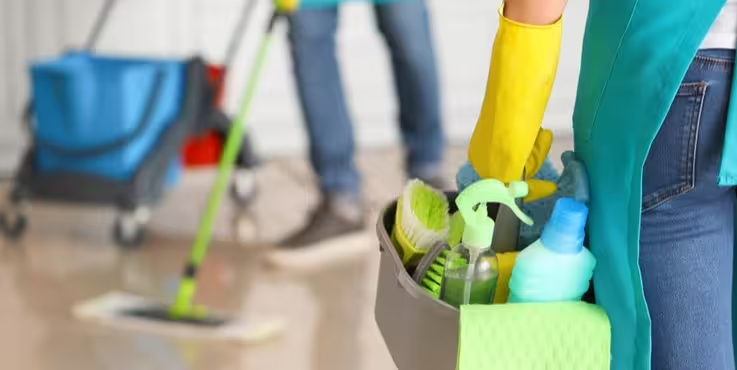
Professional Housekeeping & Deep Cleaning Services
Perfect Solution Contracting provides professional housekeeping and deep cleaning services as part of integrated facility management for commercial, government, residential, administrative, industrial, and other managed facilities.
Our cleaning programmes can be structured according to the building type, occupancy, operating hours, traffic levels, surface materials, hygiene requirements, client priorities, and the agreed facility-management scope.
Housekeeping focuses primarily on routine cleaning and maintaining the day-to-day condition of occupied spaces, while deep cleaning involves more intensive or periodic cleaning of areas and surfaces that require additional attention beyond the normal daily routine.
The required cleaning method, frequency, equipment, and products should be selected according to the actual surface, level of contamination, manufacturer guidance where applicable, and approved site procedures.
Routine Housekeeping Services
Routine housekeeping supports the daily cleanliness and presentation of buildings and occupied areas through scheduled cleaning activities.
Typical activities can include dusting, wiping, vacuuming, sweeping, mopping, waste collection, washroom cleaning, internal glass cleaning, and general cleaning of accessible surfaces.
Cleaning frequencies can vary between different areas of the same facility according to occupancy, traffic, operational requirements, and agreed service levels.
Deep Cleaning Services
Deep cleaning provides more intensive attention to selected areas, surfaces, fixtures, and spaces that may not require the same level of treatment during routine daily cleaning.
Depending on the facility, deep cleaning can include detailed floor cleaning, furniture cleaning, high-level dust removal, wall and partition cleaning, internal glazing, detailed washroom cleaning, accessible vents and grilles, and other agreed areas.
Deep cleaning can be planned periodically, during low occupancy, following refurbishment, before handover, or in response to specific facility requirements.
Office Cleaning
Office cleaning can include workspaces, meeting rooms, reception areas, corridors, common areas, internal glazing, furniture, accessible surfaces, and other occupied areas included within the service scope.
Cleaning activities should be coordinated to reduce unnecessary disruption to employees, visitors, meetings, and normal business operations.
Reception & Lobby Cleaning
Reception areas and building lobbies often experience significant pedestrian traffic and may require frequent attention to floors, entrance areas, furniture, glass, counters, doors, and other visible surfaces.
Cleaning frequencies can be adjusted according to occupancy patterns, weather conditions, events, and facility presentation requirements.
Common Area Cleaning
Common areas may include corridors, waiting areas, lounges, circulation spaces, staircases, lift lobbies, and other shared building spaces.
Cleaning plans can define the required tasks, frequencies, inspection requirements, and responsible teams for each area.
Washroom Cleaning
Washrooms require structured cleaning due to their frequency of use and hygiene requirements.
Services can include cleaning of sanitary fixtures, basins, mirrors, partitions, floors, doors, dispensers, and other accessible surfaces included within the approved scope.
Consumables such as soap, tissue products, and other washroom supplies can also be monitored and replenished where included within the facility-management contract.
High-Touch Surface Cleaning
Frequently touched surfaces can require additional attention depending on facility usage and the approved cleaning programme.
These areas may include door handles, handrails, lift buttons, counters, switches, and other frequently contacted surfaces.
Cleaning and disinfection are not automatically the same process. Where disinfection is required, suitable products, contact times, procedures, and safety requirements should be defined separately.
Floor Cleaning & Maintenance
Floor-care procedures should be selected according to the installed flooring material and its condition.
Facilities may contain ceramic or porcelain tiles, natural stone, vinyl, carpet, wood, epoxy, resilient flooring, or other finishes that require different cleaning methods.
Using unsuitable chemicals, excessive water, aggressive pads, or inappropriate machinery can damage certain flooring systems. Cleaning procedures should therefore be compatible with the specific material.
Hard Floor Cleaning
Hard-floor maintenance can include sweeping, dust control, damp mopping, machine cleaning, spot cleaning, and other appropriate procedures depending on the flooring type.
Periodic treatment can be planned according to the material, manufacturer guidance, traffic conditions, appearance requirements, and approved maintenance programme.
Natural Stone Floor Care
Marble, granite, limestone, terrazzo, and other natural or engineered stone surfaces require cleaning products and methods compatible with the particular material.
Specialist restoration, polishing, grinding, or crystallisation activities, where required, should be treated separately from routine cleaning and carried out using appropriate procedures.
Carpet Cleaning
Carpet maintenance can include routine vacuuming, spot cleaning, and periodic deeper cleaning according to the carpet type, level of use, contamination, and approved cleaning method.
Appropriate drying time and area control should be considered where wet or extraction-based cleaning methods are used.
Furniture & Upholstery Cleaning
Upholstered furniture may require vacuuming, spot cleaning, or periodic specialist cleaning depending on the fabric, manufacturer instructions, condition, and type of contamination.
Cleaning products should be tested or confirmed as compatible where there is a risk of staining, discolouration, shrinkage, or material damage.
Internal Glass Cleaning
Internal glass cleaning can include partitions, doors, windows, mirrors, and other accessible glazed surfaces.
High-level or external glazing requiring specialist access should be planned separately according to the building configuration and applicable work-at-height procedures.
Doors, Partitions & Wall Surfaces
Doors, washable partitions, wall finishes, skirting, frames, and similar architectural surfaces can be included within periodic or deep-cleaning programmes.
Cleaning techniques should be appropriate for the material and finish to avoid staining, scratching, moisture damage, or deterioration.
Staircase Cleaning
Staircases can require cleaning of steps, landings, handrails, balustrades, skirting, and surrounding surfaces according to the building's usage and cleaning programme.
Wet cleaning activities should be controlled to reduce slip hazards and maintain safe circulation routes.
Elevator Interior Cleaning
Elevator car cleaning can include floors, wall panels, mirrors, doors, handrails, and other accessible interior surfaces.
Cleaning methods should avoid excessive moisture or chemicals around elevator controls, buttons, door equipment, sensors, and other sensitive components.
Pantry & Break Area Cleaning
Pantries and employee break areas can require routine cleaning of floors, counters, sinks, external appliance surfaces, cabinets, tables, and other areas included in the service scope.
Cleaning responsibilities should be clearly defined, particularly where food preparation equipment or specialist kitchen systems are present.
High-Level Dusting
Periodic deep cleaning may include dust removal from accessible high-level surfaces such as ledges, architectural features, selected light fittings, exposed services, and other areas that are not normally included in daily cleaning.
Where work at height is required, suitable access equipment, competent personnel, and appropriate safety procedures should be used.
Light Fixture Cleaning
Accessible light fittings may accumulate dust and require periodic cleaning as part of a deep-cleaning programme.
Cleaning around electrical equipment should be coordinated carefully, with isolation or specialist support used where required by the equipment or work activity.
Accessible Air Grilles & Diffusers
Dust can accumulate on accessible HVAC grilles and diffusers. External surface cleaning can be coordinated as part of housekeeping or periodic deep cleaning.
Internal duct cleaning and technical HVAC maintenance are separate specialist activities and should not be confused with routine surface cleaning.
Waste Collection
Housekeeping services can include collection of routine waste from designated bins and transfer to approved collection points according to the facility's waste procedures.
Waste streams requiring specialist handling should be separated from general housekeeping waste and managed according to the applicable site procedures and requirements.
Waste Segregation Support
Where a facility operates a waste-segregation programme, housekeeping teams can support collection from designated containers and transfer waste according to the approved segregation arrangement.
Recycling, hazardous waste, electronic waste, medical waste, or other controlled waste streams may require separate procedures and authorised service providers.
Cleaning Equipment
Cleaning operations may use manual tools, vacuum cleaners, wet and dry vacuums, floor machines, scrubber-dryers, carpet-cleaning equipment, pressure equipment, or other suitable machinery depending on the task.
Equipment should be selected according to the surface, area size, access, cleaning requirement, noise limitations, electrical conditions, and site procedures.
Cleaning Chemicals & Consumables
Cleaning chemicals should be appropriate for their intended application and compatible with the surfaces being treated.
Products should be labelled, stored, diluted, and used according to manufacturer instructions, applicable safety information, and facility procedures.
Mixing incompatible cleaning chemicals should be avoided, and personnel should receive appropriate instructions for the products used within their work activities.
Colour-Coded Cleaning Systems
Where appropriate, colour-coded cleaning tools and equipment can be used to separate activities between different areas and reduce unintended transfer of contamination.
The selected colour-coding arrangement should be defined within the facility's cleaning procedures and applied consistently by the cleaning team.
Cleaning Schedules
Cleaning schedules can define the required tasks, locations, frequencies, shifts, responsible personnel, inspection requirements, and periodic cleaning activities for each facility.
High-traffic areas may require more frequent attention than low-occupancy rooms, while certain deep-cleaning tasks may be scheduled weekly, monthly, periodically, or according to actual condition.
Zone-Based Cleaning
Large facilities can be divided into cleaning zones to support workforce allocation, supervision, inspection, and service tracking.
Zones can be established according to floors, buildings, departments, occupancy, functional areas, or other operational requirements.
Day & Night Cleaning
Cleaning activities can be scheduled around facility operating hours where the contract requires this. Routine tasks may be carried out during occupied periods, while disruptive or intensive activities can be planned during lower-occupancy periods.
The final schedule should consider access restrictions, security arrangements, noise, safety, building operations, and client requirements.
Periodic Deep Cleaning
Periodic deep cleaning can supplement daily housekeeping by targeting areas that require more intensive cleaning at longer intervals.
The frequency should be based on the building's use, surface condition, traffic, contamination, operational requirements, and agreed cleaning specification.
Post-Construction Cleaning
Construction and renovation works can leave dust, packaging, labels, protective materials, residues, and other construction-related contamination.
Post-construction cleaning can prepare completed areas for inspection, handover, occupancy, or normal facility operations according to the project requirements.
Sensitive finishes should be treated carefully because aggressive scraping, unsuitable chemicals, or abrasive cleaning can damage newly installed materials.
Pre-Handover Cleaning
Pre-handover cleaning can include detailed cleaning of completed rooms, floors, glazing, fixtures, joinery, sanitary areas, and other surfaces before final inspection or occupancy.
The cleaning scope should be coordinated with construction completion and snagging activities to reduce repeated cleaning caused by unfinished work.
Event & Special Cleaning
Facilities may require additional cleaning before or after meetings, events, high-occupancy periods, special operations, or other planned activities.
Temporary cleaning resources can be coordinated according to the event requirements and agreed service scope.
Reactive Cleaning
Reactive cleaning addresses unexpected spills, localised contamination, increased foot traffic, weather-related dirt, or other unplanned cleaning requirements.
Requests can be prioritised according to safety, operational impact, location, and the nature of the reported condition.
Spill Response
Routine spills should be addressed using an appropriate cleaning method while controlling the surrounding area to reduce slip or access hazards.
Unknown, hazardous, chemical, biological, or otherwise controlled substances may require specialist procedures and should not automatically be treated as normal housekeeping waste.
Cleaning in Occupied Facilities
Housekeeping in occupied facilities requires coordination with building users and operational teams to maintain access while carrying out cleaning activities safely.
Wet floors, cleaning machinery, cables, equipment, and temporary work areas should be controlled using suitable warning signs, barriers, or other precautions where required.
Health, Safety & Environment
Cleaning personnel can be exposed to chemicals, manual handling, wet surfaces, electrical equipment, machinery, work at height, and other workplace hazards.
Appropriate training, personal protective equipment, equipment inspections, chemical information, safe work procedures, and supervision should be provided according to the nature of the work.
Quality Control Inspections
Cleaning quality can be monitored through scheduled inspections using area-specific checklists and agreed acceptance requirements.
Inspections can identify missed tasks, recurring cleaning issues, consumable shortages, equipment problems, damaged surfaces, or other conditions requiring corrective action.
Supervisor Inspections
Cleaning supervisors can review completed areas, monitor staff deployment, check cleaning materials and equipment, follow up on service requests, and record identified deficiencies.
Repeated deficiencies can be analysed to determine whether additional training, revised frequencies, different equipment, or changes to the cleaning method are required.
Service Requests & Complaints
Cleaning-related service requests and complaints can be recorded through the facility customer-support or work order process.
Requests can be assigned, tracked, completed, and closed according to the applicable facility-management workflow.
CAFM & CMMS Integration
Planned and reactive cleaning activities can be managed through Computer-Aided Facility Management (CAFM) or Computerised Maintenance Management Systems (CMMS) where these platforms form part of the facility operation.
Digital records can include cleaning locations, schedules, frequencies, work orders, assigned teams, inspections, complaints, completion status, and other operational information.
SLA & KPI Monitoring
Cleaning Service Level Agreements (SLAs) and Key Performance Indicators (KPIs) can be established according to the facility-management contract.
Monitoring may consider scheduled task completion, inspection results, response to cleaning requests, recurring deficiencies, complaints, and other agreed measures.
Performance targets should be based on the approved contract and cleaning specification rather than applying a universal standard to every facility.
Housekeeping Staffing & Supervision
Cleaning resources can be planned according to the size of the facility, number and type of spaces, operating hours, occupancy, cleaning frequencies, service specification, and required shift coverage.
Supervisory arrangements support workforce allocation, inspections, reporting, material control, task coordination, and follow-up of operational issues.
Cleaning Material & Consumable Management
Cleaning materials, chemicals, tools, equipment, and consumables can be monitored to support planned housekeeping activities.
Storage areas should be organised appropriately and products should be stored according to their applicable handling and safety requirements.
Housekeeping & Deep Cleaning Scope
- Routine housekeeping services
- Periodic deep cleaning
- Office cleaning
- Reception and lobby cleaning
- Common-area cleaning
- Washroom cleaning
- High-touch surface cleaning
- Hard-floor cleaning
- Natural stone floor care
- Carpet cleaning
- Furniture and upholstery cleaning
- Internal glass cleaning
- Door and partition cleaning
- Staircase cleaning
- Elevator interior cleaning
- Pantry and break-area cleaning
- High-level dusting
- Accessible light-fixture cleaning
- Accessible grille and diffuser cleaning
- Routine waste collection
- Waste segregation support
- Cleaning consumable replenishment
- Scheduled cleaning programmes
- Zone-based cleaning
- Reactive cleaning
- Spill response
- Post-construction cleaning
- Pre-handover cleaning
- Event and special cleaning
- Cleaning equipment management
- Cleaning chemical management
- Quality-control inspections
- Supervisor inspections
- Service-request tracking
- CAFM and CMMS coordination
- SLA and KPI monitoring
Integrated Cleaning & Facility Support
Professional housekeeping requires more than performing individual cleaning tasks. An effective programme combines cleaning schedules, trained personnel, appropriate equipment, compatible cleaning products, supervision, quality inspections, service requests, and performance monitoring.
Perfect Solution Contracting provides coordinated housekeeping and deep cleaning services according to the facility type, occupancy, operational requirements, surface materials, cleaning specification, and agreed facility-management scope.