
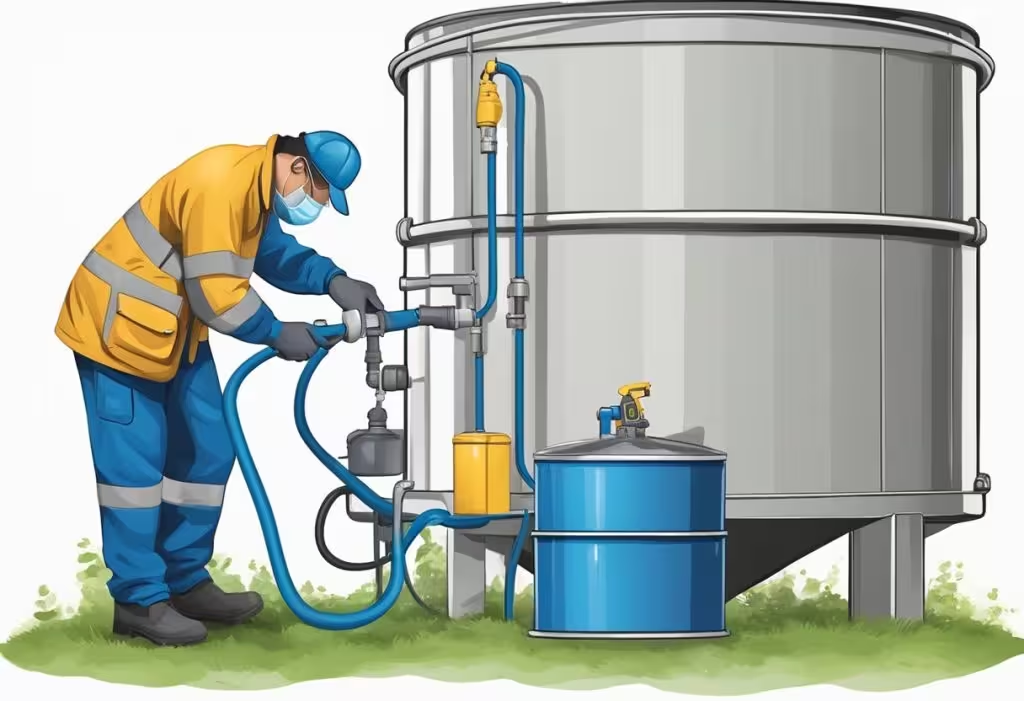
Water Tank Cleaning & Disinfection Services
Perfect Solution Contracting provides water tank cleaning and disinfection support as part of integrated facility management services for commercial, residential, government, administrative, industrial, and other managed facilities.
Water storage tanks can accumulate sediment, scale, debris, deposits, and other contamination over time. Periodic inspection, cleaning, and appropriate disinfection can therefore form an important part of building water-system maintenance.
A professional tank-cleaning programme requires more than washing visible surfaces. The process can include planning, isolation, draining, internal inspection, sediment removal, surface cleaning, disinfection, controlled rinsing, refilling, restoration of the water system, documentation, and water-quality verification where required.
The exact procedure should be selected according to the tank construction, intended water use, system configuration, contamination condition, approved method statement, chemical manufacturer instructions, site requirements, and applicable health and safety procedures.
Water Storage Tank Maintenance
Water tanks form part of the wider building water distribution system and should be maintained together with associated pumps, valves, level controls, piping, access arrangements, overflow connections, vents, and other relevant components.
Cleaning can address accumulated deposits inside the tank, while inspection can identify physical defects that require separate maintenance or specialist assessment.
Tank Cleaning Planning
Cleaning activities should be planned before the tank is taken out of service. Planning can include tank identification, capacity, water-system configuration, access arrangements, isolation points, drainage method, cleaning procedure, required equipment, personnel, and restoration sequence.
The impact of the shutdown on building occupants and facility operations should also be considered.
Pre-Cleaning Inspection
A pre-cleaning inspection can be performed to review the tank location, accessibility, visible external condition, water level, isolation arrangements, drainage, access covers, associated piping, and other site conditions.
This inspection supports preparation of the appropriate cleaning method and safety controls.
Tank Identification
Each tank should be clearly identified before work begins, particularly at facilities containing multiple domestic-water, utility-water, fire-water, irrigation, or other storage systems.
Correct identification helps prevent isolation or cleaning of the wrong system and supports accurate maintenance records.
Water System Isolation
The tank should be isolated from the relevant water system as required by the approved cleaning procedure.
Isolation can involve inlet, outlet, transfer, pump, or other associated valves depending on the hydraulic configuration.
Shutdown Coordination
Water tank cleaning can temporarily affect the availability of water to parts of a facility.
Shutdown requirements should therefore be coordinated with facility management, building users, operations, maintenance teams, and other affected parties before work begins.
Alternative Water Arrangements
Facilities with multiple tanks, sectional tanks, or alternative water arrangements may be able to maintain partial service while one tank is isolated.
Any temporary arrangement should follow the approved hydraulic configuration and should not be assumed possible without technical verification.
Tank Draining
Water should be drained through an appropriate route before internal cleaning begins.
The drainage process should consider the available drain capacity, discharge location, environmental conditions, surrounding areas, and the need to avoid uncontrolled flooding or damage.
Water Conservation During Draining
Where practical and technically appropriate, cleaning activities can be planned to reduce unnecessary water wastage.
Water conservation measures should not compromise the required cleaning, disinfection, flushing, or water-quality procedures.
Sediment Removal
Sediment can accumulate on tank floors and in low points over time depending on incoming water quality, tank configuration, operating conditions, and maintenance history.
Deposits should be removed using methods suitable for the tank material and contamination condition.
Sludge & Deposit Removal
Heavier deposits or sludge can require manual removal, wet vacuuming, pumping, or other suitable cleaning techniques.
Removed material should be handled and disposed of according to its characteristics and the applicable site waste-management procedures.
Internal Surface Cleaning
Tank floors, walls, internal partitions, accessible supports, and other internal surfaces can be cleaned to remove visible deposits and contamination.
Cleaning tools and methods should be compatible with the tank material and should avoid unnecessary damage to coatings, joints, sealants, liners, or other internal finishes.
Mechanical Cleaning
Appropriate brushes, scrubbing equipment, low-pressure washing, wet-vacuum equipment, or other cleaning tools may be used depending on the tank construction and approved procedure.
Excessively aggressive cleaning should be avoided where it could damage protective coatings or tank surfaces.
Pressure Washing
Pressure washing may be suitable for some tank constructions and conditions, but it should not be treated as a universal cleaning method.
Pressure, nozzle selection, surface condition, coating compatibility, drainage, and splash control should be considered before use.
Tank Disinfection
After physical cleaning, an appropriate disinfection process can be applied where required for the intended water service.
Disinfection should follow an approved procedure covering the selected disinfectant, concentration, contact time, application method, safety precautions, rinsing or flushing requirements, and restoration to service.
Disinfection Chemicals
Only chemicals suitable for the intended application should be used for tank disinfection.
Product concentration and application should follow the approved method, product information, Safety Data Sheet, and applicable requirements rather than using an arbitrary chemical concentration.
Contact Time
Disinfection effectiveness depends partly on maintaining the required chemical concentration and contact time specified by the selected procedure.
Contact time should therefore be controlled and documented where required.
Controlled Rinsing
Following cleaning and disinfection, the tank may require rinsing or flushing according to the approved procedure and chemical used.
The objective is to prepare the tank for safe restoration to its intended water service without leaving inappropriate residues.
Final Internal Inspection
Before the tank is closed and returned to service, a final inspection can confirm that visible sediment, cleaning debris, tools, and temporary equipment have been removed.
The inspection can also identify defects requiring maintenance follow-up.
Tank Structural Condition
Cleaning provides an opportunity to observe accessible internal surfaces for cracking, corrosion, damaged panels, deformation, deterioration, or other visible abnormalities.
Cleaning personnel should report significant findings for appropriate technical assessment rather than assuming that cleaning itself corrects structural defects.
Waterproofing Condition
Concrete water tanks can include internal waterproofing, protective coatings, liners, or other water-retaining systems.
Visible deterioration, blistering, peeling, cracking, or suspected leakage should be recorded and referred for specialist assessment where necessary.
GRP Water Tanks
Glass Reinforced Plastic (GRP) sectional tanks require cleaning methods compatible with the panels, internal surfaces, sealants, bolts, tie rods, partitions, and other installed components.
Internal inspection can also identify visible panel, seal, joint, or support issues requiring further maintenance.
Concrete Water Tanks
Concrete tanks can require inspection of internal surfaces, coatings, waterproofing, joints, corners, penetrations, and visible cracking in addition to routine cleaning.
Significant cracks, leakage, or deterioration should be technically evaluated before cosmetic repairs are undertaken.
Steel Water Tanks
Steel tanks can require inspection for visible corrosion, coating deterioration, damaged surfaces, joints, and other abnormalities.
Corrosion or coating defects should be assessed for the appropriate repair and protective treatment.
Tank Access Covers
Tank access covers and hatches should be inspected for physical condition, secure closure, damage, corrosion, sealing, and accessibility.
Covers should help protect the tank from uncontrolled external contamination when the tank is in normal service.
Access Ladders
Internal and external access ladders should be visually inspected before use for corrosion, loose components, damaged fixings, and other obvious defects.
Unsafe access arrangements should be addressed before personnel enter or work around the tank.
Tank Vents
Tank vents form part of the water-storage arrangement and should be checked for visible damage, obstruction, contamination, or missing protective components where applicable.
Vent arrangements should correspond to the approved tank design.
Overflow Pipes
Overflow connections can be inspected for blockage, damage, leakage, inappropriate termination, or other visible issues.
Persistent overflow can indicate a level-control or inlet-valve problem requiring separate investigation.
Drain Connections
Tank drain connections should remain accessible and operational where provided for maintenance and cleaning.
Blocked or defective drain arrangements can make future maintenance more difficult and should be reported for corrective action.
Inlet & Outlet Connections
Accessible inlet and outlet connections can be visually inspected for leakage, corrosion, damaged supports, abnormal movement, and other visible defects.
Hydraulic modifications should not be made without reviewing the approved water-system design.
Isolation Valves
Functional isolation valves are important for maintenance because they allow tanks or associated equipment to be isolated where the system design permits.
Defective or inaccessible valves should be identified for maintenance follow-up.
Water Level Controls
Water tanks can use float valves, level switches, transmitters, electrodes, or other devices to monitor or control water level.
These components can be inspected and tested according to the installed system and approved maintenance procedures.
Float Valve Inspection
Mechanical float valves can be checked for free movement, leakage, physical damage, incorrect shutoff, or other operating abnormalities.
Continuous overflow or failure to refill can indicate a problem requiring corrective maintenance.
Level Sensors
Electronic level sensors can provide signals to pumps, valves, control panels, alarms, or BMS systems.
Sensor condition, mounting, wiring, calibration, and control logic should be assessed where abnormal level indications are reported.
Water Pumps
Water storage tanks are commonly associated with transfer, booster, or distribution pumps depending on the building water-system design.
Tank cleaning can be coordinated with pump inspections where a shutdown provides suitable access or maintenance opportunity.
Pump Suction Conditions
Sediment accumulation near suction points can affect system cleanliness and may require particular attention during tank cleaning.
Suction arrangements should not be modified without appropriate hydraulic and technical review.
Domestic Water Systems
Tanks supplying domestic water form part of a wider system that can include incoming supply, storage, pumps, pressure systems, piping, valves, and terminal outlets.
Tank cleaning alone does not correct contamination or defects elsewhere in the water-distribution system.
Potable Water Considerations
Where a tank stores water intended for potable or domestic use, cleaning materials, disinfection procedures, restoration, and verification should be appropriate to that intended use.
Water should not be represented as suitable for consumption solely because the tank has been visually cleaned.
Water Quality Verification
Water-quality verification may be required after cleaning and disinfection depending on the tank application, facility requirements, approved procedure, and applicable requirements.
Verification can include field measurements and, where required, laboratory analysis using appropriate sampling and testing procedures.
Water Sampling
Where water sampling is required, samples should be collected using an appropriate method to reduce the risk of contamination during sampling.
Sampling location, timing, container type, handling, transport, and analysis should reflect the required testing programme.
Laboratory Testing Coordination
Where laboratory analysis is required, testing can be coordinated with an appropriate laboratory according to the parameters specified for the facility.
The required test parameters should be defined by the applicable water-quality requirements rather than assuming the same testing package for every tank.
Microbiological Testing
Microbiological testing may form part of post-cleaning verification where required.
Results should be interpreted according to the applicable water-quality criteria and the intended use of the water.
Physical & Chemical Parameters
Depending on the application, water-quality assessment can include selected physical or chemical parameters in addition to microbiological testing.
Testing requirements should be established according to the relevant facility or water-quality requirements.
Tank Refilling
After cleaning, disinfection, final inspection, and any required rinsing, the tank can be refilled according to the approved restoration procedure.
Filling should be monitored for leakage, abnormal level behaviour, valve operation, and other visible system issues.
Restoration to Service
Returning a tank to service can involve restoring valve positions, pumps, level controls, automatic operation, and other associated systems.
The restoration sequence should be verified to avoid leaving equipment isolated, valves incorrectly positioned, or controls in manual mode unintentionally.
Post-Cleaning Inspection
After the tank is restored, an external inspection can confirm that access covers are secured, valves are in the required position, equipment is operational, and there is no obvious leakage.
Outstanding defects should be recorded for corrective maintenance.
Tank Leakage Inspection
Visible water loss, dampness, staining, or recurring refill demand can indicate a potential tank or piping leakage issue.
Cleaning can reveal some defects, but persistent leakage may require specialist investigation of tank joints, waterproofing, piping, valves, or structural components.
Cleaning Frequency
Water tank cleaning frequency should be determined by applicable requirements, facility procedures, tank condition, water quality, system use, inspection findings, and the approved maintenance programme.
A single universal cleaning interval should not be assumed for every water-storage application.
Planned Preventive Maintenance
Water tank inspection and cleaning can be incorporated into the facility's Planned Preventive Maintenance (PPM) programme.
Scheduled activities can include external inspections, tank cleaning, level-control checks, valve inspections, pump coordination, water-quality activities, and documentation.
Corrective Maintenance
Defects identified during tank inspection can generate corrective maintenance work orders for valves, pumps, level controls, covers, vents, overflow arrangements, coatings, waterproofing, piping, or other components.
Specialist repairs should be assigned to appropriately qualified personnel according to the type of defect.
Confined Space Assessment
Some water tanks can present confined-space hazards depending on their configuration, access, ventilation, internal geometry, and work activity.
A tank should therefore be assessed before entry rather than assuming that every tank is safe for routine internal access.
Confined Space Entry
Where the tank is classified as a confined space, entry should follow the approved confined-space procedure, permit requirements, atmospheric testing, ventilation, communication, supervision, and rescue arrangements.
Entry should be restricted to trained and authorised personnel using the required equipment and controls.
Atmospheric Testing
Where required by the confined-space assessment, atmospheric conditions should be tested using suitable calibrated equipment before and during entry as specified by the approved procedure.
Atmospheric monitoring does not replace the other controls required for confined-space work.
Ventilation During Tank Cleaning
Temporary ventilation may be required during internal tank work depending on the tank configuration, cleaning chemicals, environmental conditions, and risk assessment.
Ventilation arrangements should support the approved safe-working procedure.
Rescue Arrangements
Where confined-space entry is required, appropriate rescue arrangements should be established before entry begins.
Rescue planning should reflect the actual tank access, work location, identified hazards, and available emergency resources.
Chemical Safety
Cleaning and disinfecting chemicals should be handled according to the applicable product information, Safety Data Sheets, approved method statement, and risk assessment.
Chemicals should not be mixed unless the approved procedure specifically permits the combination.
Personal Protective Equipment
Required PPE should be selected according to the cleaning method, chemicals used, tank access, slip hazards, confined-space assessment, and other identified risks.
PPE requirements should form part of the task-specific risk assessment.
Electrical Safety
Electrical equipment used in wet tank-cleaning environments should be suitable for the application and controlled through the appropriate electrical safety procedures.
Existing pumps, level controls, lighting, and associated electrical systems should be isolated where required before work begins.
Slip & Fall Prevention
Wet tank surfaces and surrounding areas can create slip hazards during cleaning.
Access, footwear, housekeeping, temporary hoses, equipment positioning, and work practices should be controlled to reduce these risks.
Access Control
The work area should be controlled to prevent unauthorised entry during tank isolation, draining, cleaning, disinfection, and restoration.
Barriers, signs, permits, or other access-control measures can be used according to site requirements.
Tank Cleaning Equipment
Cleaning equipment can include brushes, hoses, wet vacuums, pumps, lighting, ventilation equipment, cleaning tools, testing instruments, and other task-specific equipment.
Equipment should be suitable for the intended work and maintained in an appropriate condition.
Cleaning Tool Hygiene
Tools used inside tanks intended for domestic or potable-water service should be appropriately clean and managed to avoid introducing unnecessary contamination.
Equipment used for unrelated contaminated activities should not be introduced without appropriate cleaning and control.
Wastewater Management
Wastewater generated during cleaning, rinsing, or disinfection should be directed to an appropriate discharge location according to the cleaning procedure and site requirements.
Uncontrolled discharge should be avoided where it could cause flooding, damage, environmental issues, or unsafe conditions.
Sediment & Waste Disposal
Sediment, debris, damaged materials, and other waste removed during cleaning should be collected and managed according to the facility's waste-management procedures.
Materials requiring specialised handling should be separated from ordinary waste where applicable.
Tank Cleaning Documentation
Cleaning records can provide traceability of the work completed and support future maintenance planning.
Documentation can include tank identification, cleaning date, work scope, observations, disinfectant details where applicable, defects identified, restoration status, and supporting records.
Before & After Records
Photographic records can document tank condition before and after cleaning where permitted by site procedures.
Images can also support reporting of damaged coatings, corrosion, sediment accumulation, leaking joints, or other maintenance observations.
Inspection Reports
Inspection reports can identify visible defects discovered during cleaning and distinguish completed cleaning activities from separate repair requirements.
This helps facility teams plan follow-up corrective maintenance without assuming that every defect was included in the cleaning scope.
Water Quality Records
Where post-cleaning water testing is required, test reports and sampling information can be maintained with the tank's maintenance records.
Results requiring corrective action should be reviewed before the water system is treated as satisfactory for its intended use.
Asset Register Management
Water tanks can be registered as maintainable facility assets with information such as location, tank type, material, capacity, service, associated pumps, and inspection requirements.
Accurate asset records support scheduling and historical maintenance tracking.
CAFM & CMMS Integration
Water tank inspection and cleaning activities can be managed through Computer-Aided Facility Management (CAFM) or Computerised Maintenance Management Systems (CMMS) where these platforms are used.
Scheduled cleaning, inspections, corrective work orders, defects, water-quality records, and supporting documents can be associated with the relevant tank asset.
Work Order Management
Tank cleaning can be issued as a planned maintenance work order with the required scope, shutdown, procedures, personnel, permits, and completion records.
Separate corrective work orders can be generated for defects identified during the cleaning process.
Cleaning Schedule Management
Cleaning schedules can be maintained according to the approved facility maintenance programme and adjusted where inspection findings or operating conditions indicate that review is required.
Multiple tanks can be scheduled in a coordinated sequence to reduce unnecessary impact on facility water availability where the system design allows.
Water Tank Cleaning Service Scope
- Water tank cleaning planning
- Pre-cleaning site inspection
- Tank identification and verification
- Shutdown coordination
- Water-system isolation
- Tank draining
- Sediment removal
- Sludge and deposit removal
- Internal surface cleaning
- Floor cleaning
- Wall cleaning
- Tank disinfection
- Controlled rinsing where required
- Final internal inspection
- Tank structural observations
- Waterproofing observations
- GRP tank condition observations
- Concrete tank condition observations
- Steel tank condition observations
- Access-cover inspection
- Access-ladder inspection
- Tank vent inspection
- Overflow inspection
- Drain-connection inspection
- Inlet and outlet inspection
- Isolation-valve inspection
- Water-level control inspection
- Float-valve inspection
- Level-sensor coordination
- Associated pump coordination
- Leakage observations
- Water-quality verification coordination
- Water sampling where required
- Laboratory testing coordination where required
- Microbiological testing coordination where required
- Tank refilling
- Restoration to service
- Post-cleaning inspection
- Planned preventive maintenance
- Corrective maintenance coordination
- Confined-space assessment
- Confined-space controls where applicable
- Atmospheric testing where required
- Temporary ventilation where required
- Rescue planning where applicable
- Chemical safety controls
- PPE requirements
- Electrical safety coordination
- Work-area access control
- Wastewater management
- Sediment and waste disposal coordination
- Before-and-after records
- Tank inspection reports
- Water-quality records where applicable
- Asset-register management
- CAFM and CMMS integration
- Work-order management
- Cleaning schedule management
Coordinated Water Tank Maintenance
Effective water tank maintenance requires coordination between cleaning personnel, plumbing teams, pump maintenance, electrical and control personnel, facility management, HSE personnel, water-quality specialists, and laboratory services where testing is required.
Perfect Solution Contracting provides coordinated water tank cleaning and disinfection support covering isolation, draining, sediment removal, internal cleaning, disinfection, inspection, refilling, restoration, maintenance observations, documentation, and water-quality coordination according to the approved facility management scope and site requirements.