
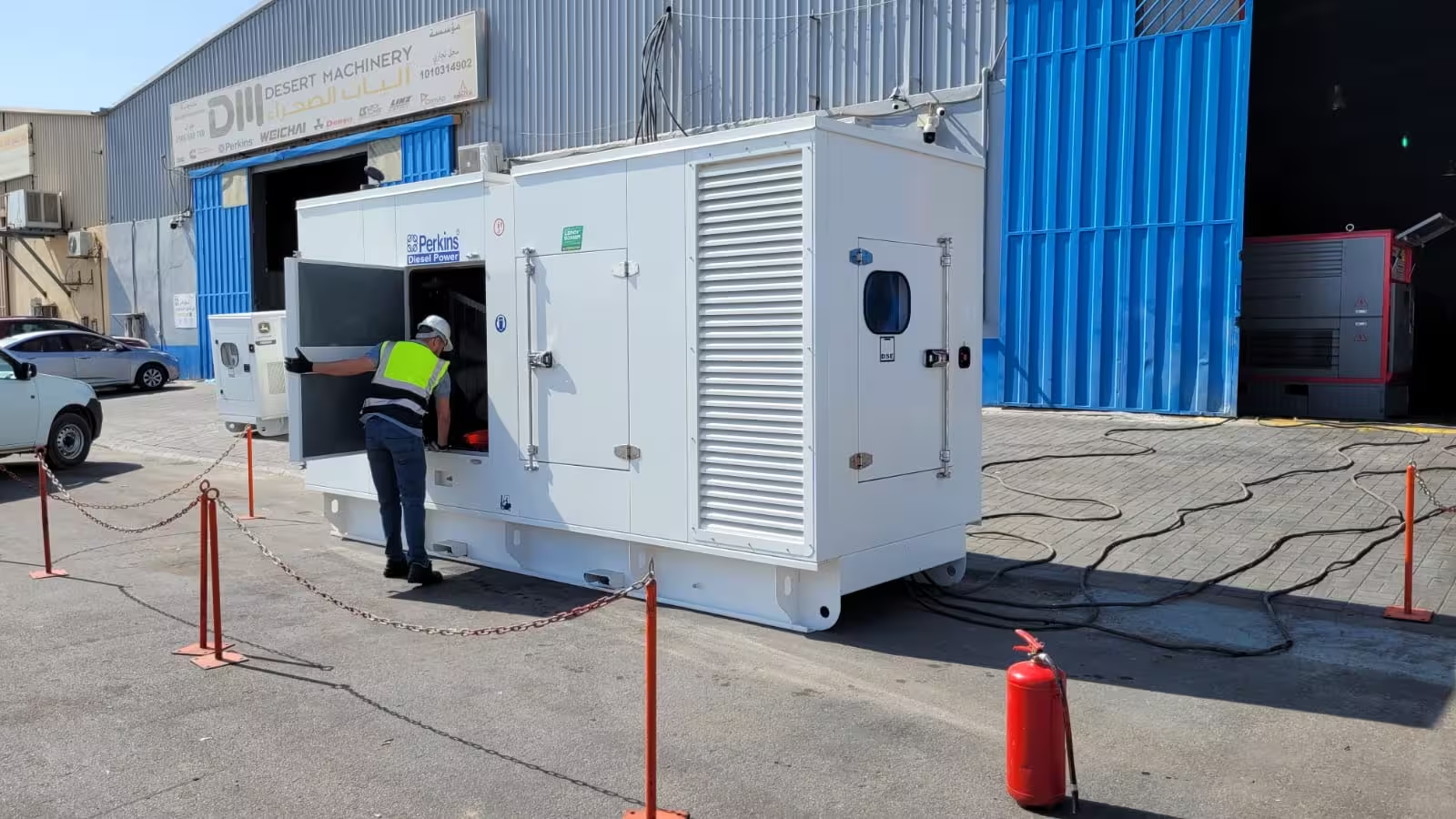
Diesel Generator Maintenance Services
Perfect Solution Contracting provides preventive and corrective maintenance services for diesel generator systems used as standby or emergency power sources in commercial, government, residential, industrial, and specialised facilities.
Diesel generators are an important part of many standby power systems. Their readiness depends on the condition of the engine, alternator, starting batteries, fuel system, cooling system, lubrication system, control panel, protection devices, Automatic Transfer Switch (ATS), and associated electrical connections.
A generator may remain idle for extended periods and still be expected to start when the normal power source becomes unavailable. For this reason, scheduled inspection, exercising, testing, and maintenance are important parts of generator facility management.
Maintenance frequencies and procedures should be based on the generator manufacturer's recommendations, operating hours, equipment condition, environmental conditions, criticality, approved maintenance strategy, and contractual requirements.
Preventive Maintenance
Preventive maintenance is carried out at planned intervals to inspect generator condition, perform scheduled servicing, identify deterioration, and support operational readiness.
Maintenance activities may be scheduled according to calendar intervals, engine operating hours, manufacturer recommendations, or a combination of these criteria.
Maintenance records should document the work performed, inspection results, measurements, replaced materials, identified defects, and recommended follow-up actions.
Routine Generator Inspections
Routine inspections can identify visible leakage, damaged components, abnormal contamination, loose connections, deteriorated hoses, low fluid levels, battery issues, corrosion, and other conditions requiring attention.
The generator area should also be reviewed for ventilation, access, cleanliness, stored materials, visible obstructions, and conditions that could affect equipment operation or maintenance.
Diesel Engine Maintenance
The diesel engine requires periodic maintenance according to its operating hours, service conditions, and manufacturer's maintenance schedule.
Typical engine-related activities can include inspection of oil levels, filters, belts, hoses, connections, leakage points, mounts, intake components, cooling components, and other serviceable items.
Replacement intervals for consumables should follow the applicable manufacturer recommendations and the actual operating condition of the equipment.
Engine Oil & Lubrication System
Engine oil condition and level are important to diesel engine operation. Oil and oil filters should be serviced according to the manufacturer's specified intervals and operating conditions.
Maintenance inspections can also identify visible oil leakage and other lubrication-system conditions requiring corrective action.
Fuel System Maintenance
The generator fuel system may include bulk or day tanks, fuel lines, pumps, filters, valves, level devices, and associated controls depending on the installation.
Maintenance can include inspection for leakage, contamination, damaged connections, fuel-level issues, filter condition, and correct operation of applicable fuel-transfer components.
Fuel stored for extended periods may deteriorate or become contaminated. Fuel condition should therefore be managed according to the installation, storage conditions, manufacturer guidance, and approved maintenance procedures.
Fuel Filters
Fuel filters protect the engine fuel system from contaminants and should be inspected and replaced at appropriate service intervals.
Water separators, where installed, should also be inspected and serviced according to the manufacturer's requirements.
Cooling System Maintenance
Generator cooling systems require inspection to support proper engine temperature control during operation.
Maintenance may include checking coolant level and condition, radiators or heat exchangers, hoses, clamps, belts, pumps, fans, leakage points, and other applicable cooling-system components.
The cooling arrangement varies between generator installations, so maintenance should follow the actual system configuration rather than assuming a single radiator arrangement for every generator.
Radiator & Ventilation Inspection
Where radiator cooling is used, airflow paths should remain unobstructed and the radiator should be inspected for contamination, damage, leakage, or other conditions that could affect cooling performance.
Generator-room ventilation should also be maintained according to the installed system and equipment requirements.
Air Intake System
Air filters and intake components should be inspected and serviced according to operating conditions and manufacturer recommendations.
Dusty or demanding environments may require different inspection frequencies compared with cleaner indoor installations.
Exhaust System Inspection
Exhaust components should be inspected for visible leakage, damaged supports, loose connections, deterioration, and other abnormal conditions.
Exhaust routing, insulation, flexible connections, and associated components should be maintained according to the generator installation and applicable project requirements.
Starting Battery Maintenance
Starting batteries are critical because a generator cannot provide standby power if the engine cannot start when required.
Battery maintenance can include visual inspection, terminal inspection, cleaning where required, charger checks, voltage measurements, and appropriate battery testing according to the installed battery type and maintenance procedure.
Battery age, condition, environmental temperature, charging performance, and test results should be considered when evaluating replacement requirements.
Battery Charger Inspection
The battery charger should be inspected to confirm that the generator starting batteries are being maintained under the intended charging conditions.
Charger alarms, output indications, connections, and associated protective devices can be checked as part of the maintenance programme.
Alternator Inspection
The generator alternator converts mechanical energy from the diesel engine into electrical power and should be included within the generator maintenance programme.
Inspections can include accessible connections, ventilation openings, physical condition, abnormal contamination, and electrical measurements where appropriate.
Generator Control Panel
The generator controller manages starting, stopping, monitoring, alarms, protection functions, and operating information according to the generator configuration.
Maintenance can include checking displayed alarms, event records, operating hours, measurements, status indications, control settings where authorised, and communication with associated systems.
Generator Protection Systems
Generator systems may include protection for conditions such as overcurrent, abnormal voltage, abnormal frequency, low oil pressure, high coolant temperature, overspeed, and other engine or electrical conditions depending on the equipment design.
Protection and alarm functions should be inspected and tested according to approved procedures and manufacturer requirements.
Automatic Transfer Switch (ATS)
The Automatic Transfer Switch is a key component of many standby generator installations. It detects conditions associated with the normal power source and manages transfer between normal and standby supplies according to its control configuration.
ATS maintenance may include visual inspection, mechanical inspection, control checks, electrical connections, status indications, and functional testing according to the manufacturer's instructions and approved isolation procedures.
Automatic Start & Transfer Testing
Periodic functional testing can verify the sequence between loss of normal supply, generator start, generator availability, transfer to standby supply, restoration of normal supply, retransfer, and generator cool-down where the installed system is configured for automatic operation.
Tests affecting building power should be planned and coordinated with facility representatives before execution.
Generator Exercise Testing
Periodic generator exercising allows the engine and associated systems to operate rather than remaining continuously idle.
Exercise procedures, duration, loading conditions, and frequency should follow the equipment requirements and approved facility maintenance programme.
Load Testing
Generator performance can be evaluated under load where required and where the electrical system permits safe testing.
During load testing, operating parameters such as voltage, current, frequency, engine temperature, oil pressure, loading, and other relevant measurements can be monitored according to the equipment configuration.
Load Bank Testing
A load bank provides a controlled electrical load that can be used to test a generator independently of, or in coordination with, the facility load according to the approved testing arrangement.
Load bank testing may be used when required to evaluate generator operation at specified loading levels. Test duration and loading steps should be established according to the applicable test procedure, equipment rating, and manufacturer recommendations.
Electrical Measurements
Generator maintenance may include appropriate electrical measurements such as voltage, current, frequency, and other parameters relevant to the installed equipment and maintenance scope.
Measurements should be taken using suitable instruments and by qualified personnel following the required electrical safety procedures.
Cable & Connection Inspection
Generator output cables, control wiring, terminals, earthing connections, and accessible electrical connections should be inspected according to the maintenance scope.
Signs of overheating, damage, contamination, corrosion, or loose connections should be investigated and corrected using appropriate isolation procedures.
Earthing & Bonding
Generator earthing and bonding arrangements form part of the overall electrical installation and should be maintained according to the approved system design.
Any testing or modification should consider the generator configuration, switching arrangement, neutral treatment, protection philosophy, and applicable electrical requirements.
Generator Room Inspection
Generator rooms should provide appropriate access for operation and maintenance while remaining free from unnecessary obstructions and inappropriate storage.
Inspections can include general housekeeping, ventilation openings, lighting, visible leaks, access routes, drainage conditions, signage, and other operational observations.
Leak Inspection
Routine maintenance should include inspection for visible fuel, oil, coolant, or other fluid leakage around the generator and associated systems.
Identified leaks should be investigated and addressed according to their source, severity, equipment requirements, and applicable site procedures.
Corrective Maintenance
Corrective maintenance addresses identified faults, failed components, abnormal alarms, leakage, starting problems, charging issues, overheating, transfer problems, and other generator-system defects.
Fault diagnosis should consider the complete standby power system rather than replacing components without identifying the underlying cause.
Generator Fault Diagnosis
Generator faults may originate from mechanical, electrical, fuel, control, battery, cooling, protection, or transfer-system issues.
Diagnostic activities can include reviewing alarms and event histories, visual inspection, electrical measurements, control checks, battery testing, fuel and cooling-system inspection, and functional testing where appropriate.
Alarm Investigation
Generator alarms should be investigated rather than routinely reset without determining their cause. Alarm history can provide useful information regarding recurring or intermittent problems.
After corrective work, appropriate functional checks should be completed before the generator is returned to its normal standby condition.
Spare Parts & Consumables
Generator maintenance may require engine oil, coolant, filters, belts, hoses, batteries, seals, sensors, relays, or other service components depending on the equipment and maintenance activity.
Replacement parts and consumables should be selected according to equipment specifications, compatibility, approved material requirements, and manufacturer recommendations.
Critical Spare Parts Planning
For generators serving critical facilities, selected spare parts and consumables can be identified according to equipment criticality, expected service requirements, lead times, manufacturer recommendations, and the approved maintenance strategy.
Integration with UPS Systems
In facilities containing both UPS and standby generator systems, the two systems perform different but related functions within the standby power architecture.
A UPS can provide immediate battery-backed power to connected critical loads during a supply disturbance, while the standby generator starts and becomes available to support longer-duration operation according to the electrical system design.
Generator and UPS compatibility should be considered within the approved electrical design, including load characteristics, generator capacity, UPS input behaviour, transfer arrangements, and other relevant system requirements.
BMS & Remote Monitoring
Where generator controls are integrated with a Building Management System or other monitoring platform, selected operating status, alarms, and measurements may be available for remote monitoring.
The available information depends on the generator controller, communication interface, integration scope, and configured BMS points.
Preventive Maintenance Scheduling
Generator maintenance activities can be incorporated into the facility preventive maintenance programme and managed through scheduled work orders.
Service intervals can be adjusted according to manufacturer recommendations, operating hours, previous maintenance history, equipment condition, environmental conditions, and operational requirements.
CAFM & CMMS Records
Generator assets can be registered within a Computer-Aided Facility Management (CAFM) or Computerised Maintenance Management System (CMMS) where these platforms form part of the facility-management operation.
Records can include equipment identification, model, serial number, location, rating, operating hours, preventive maintenance activities, corrective work, spare parts, test records, and maintenance history.
Maintenance Documentation
Maintenance documentation provides a record of generator condition and completed service activities.
Depending on the project, documentation may include inspection checklists, service reports, measurement records, test results, identified defects, photographs, spare-parts information, and recommendations for further action.
Safety & Work Coordination
Diesel generator maintenance involves mechanical, electrical, fuel, hot-surface, rotating-equipment, and stored-energy hazards. Work should therefore be performed by appropriately qualified personnel using the applicable site safety procedures.
Maintenance requiring isolation should be coordinated with facility representatives and carried out using the appropriate electrical and mechanical isolation procedures.
Diesel Generator Maintenance Scope
- Preventive generator maintenance
- Corrective maintenance
- Routine generator inspections
- Diesel engine inspection
- Engine oil and lubrication checks
- Oil and filter replacement
- Fuel-system inspection
- Fuel-filter maintenance
- Cooling-system inspection
- Radiator inspection
- Air-intake inspection
- Exhaust-system inspection
- Starting battery maintenance
- Battery charger inspection
- Alternator inspection
- Generator control-panel checks
- Alarm and protection checks
- ATS inspection and functional testing
- Automatic start testing
- Automatic transfer sequence testing
- Generator exercise testing
- Load testing
- Load bank testing where required
- Electrical measurements
- Cable and connection inspections
- Earthing and bonding inspection
- Generator-room inspections
- Leak inspections
- Fault diagnosis
- Alarm investigation
- Spare-parts coordination
- Critical spare-parts planning
- UPS and generator coordination
- BMS monitoring coordination
- CAFM and CMMS records
- Maintenance and testing reports
Standby Power Maintenance
Generator reliability depends on more than servicing the diesel engine alone. The complete standby power arrangement may involve the generator set, batteries, charger, fuel system, cooling system, controls, protection, ATS, electrical distribution, and monitoring systems.
Perfect Solution Contracting provides coordinated diesel generator maintenance as part of facility-management operations, with maintenance activities planned according to equipment requirements, operating conditions, manufacturer recommendations, asset criticality, and the agreed service scope.