
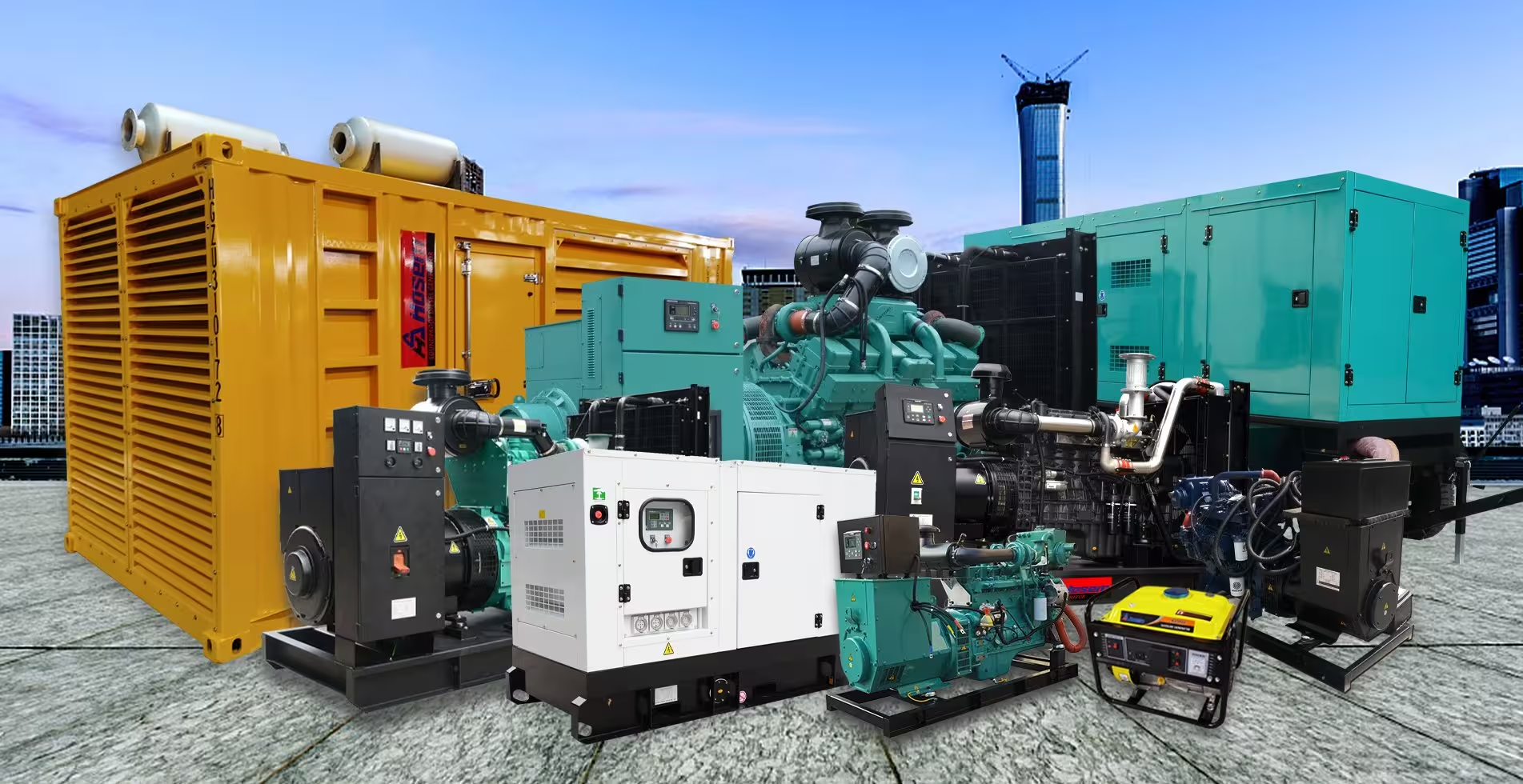
Standby Diesel Generators for Data Centers
Standby diesel generators are a critical component of backup power infrastructure for data centers and other mission-critical facilities. They provide an alternative electrical power source when the normal utility supply is unavailable for an extended period.
In a typical data center power architecture, Uninterruptible Power Supply (UPS) systems and batteries support critical loads immediately following a loss of utility power, while the standby generator starts, reaches its operating conditions, and becomes available to support the facility load.
Generator capacity should be selected based on the actual electrical load, future expansion requirements, starting characteristics of connected equipment, UPS systems, cooling equipment, motors, transformers, and other loads that may affect generator performance.
Where higher availability is required, multiple generators can be arranged using appropriate redundancy configurations such as N+1 or other architectures defined by the approved data center power design.
Automatic Transfer Switches (ATS) are commonly used to monitor the availability of the normal and standby power sources and perform source transfer according to the approved operating sequence. Generator starting, stabilization, transfer, and return to normal supply should be coordinated as part of the overall control philosophy.
Proper coordination between the generators and UPS systems is particularly important in data center applications. Generator voltage and frequency characteristics, transient response, load steps, UPS input characteristics, and other electrical parameters should be considered during system design and equipment selection.
The fuel system is another essential part of the generator installation. Depending on project requirements, the arrangement may include bulk storage tanks, day tanks, fuel transfer pumps, piping, valves, level monitoring, alarms, and leak detection systems.
Generator rooms and enclosures require appropriate ventilation and engine cooling arrangements. Air intake, heat rejection, radiator discharge, and room temperature should be coordinated according to the generator manufacturer's requirements and the mechanical design of the facility.
Exhaust systems should be designed and installed with appropriate piping, supports, flexible connections, silencers, insulation, and discharge arrangements according to equipment requirements and the approved project design.
Acoustic requirements should also be considered, particularly where generators are installed close to occupied areas or where project noise limits apply. Acoustic enclosures, silencers, vibration isolation, and other noise-control measures can be incorporated where required.
Electrical installation includes generator output connections, circuit protection, switchgear, control wiring, earthing and bonding, cable sizing, and coordination with the main and emergency electrical distribution systems.
Generator controllers can provide operating information such as voltage, current, frequency, power, engine status, fuel conditions, running hours, and alarms. Where supported, these parameters can be integrated with the Building Management System (BMS) or another compatible centralized monitoring platform.
Testing and commissioning are essential to verify the performance of the complete standby power system. Testing may include automatic starting, source transfer, generator operation, alarms, protection functions, control sequences, and load testing according to the approved commissioning requirements.
Perfect Solution Contracting provides integrated standby diesel generator solutions covering design coordination, load assessment, generator sizing, equipment supply, installation, fuel systems, ventilation and exhaust coordination, electrical connections, ATS and UPS integration, monitoring, testing, and commissioning in accordance with project requirements.
- Standby power for data centers and mission-critical facilities.
- Generator sizing based on electrical loads, starting requirements, and future capacity.
- Automatic generator starting following loss of the normal power source.
- Integration with Automatic Transfer Switches (ATS).
- Coordination with Uninterruptible Power Supply (UPS) systems.
- Redundant generator configurations where required by the project.
- Fuel storage, transfer, piping, and monitoring system coordination.
- Fuel leak detection integration where required.
- Generator room ventilation and engine cooling coordination.
- Exhaust system, silencers, and discharge arrangement coordination.
- Acoustic treatment and vibration isolation where required.
- Electrical protection, cabling, earthing, and bonding.
- Generator monitoring and BMS integration where supported.
- Automatic start, transfer, alarm, and control sequence testing.
- Load testing and commissioning according to project requirements.