
Data Center Environmental Monitoring Systems
Environmental Monitoring Systems are an important part of data center infrastructure, providing continuous monitoring of environmental conditions that can affect servers, network equipment, storage systems, and other critical IT infrastructure.
Temperature and relative humidity are among the primary parameters monitored within data halls, server rooms, network rooms, telecommunications rooms, and other critical technical areas. Maintaining these parameters within the required operating ranges supports reliable equipment operation.
Environmental sensors can be strategically installed throughout the facility and around IT racks to provide visibility into local operating conditions. Sensor locations should be selected according to the room layout, rack arrangement, cooling design, and project monitoring requirements.
Monitoring at rack level can help identify temperature differences and localized thermal conditions that may not be visible from a single room-level sensor. This information can support the assessment of cooling performance and airflow distribution.
Where required by the project, additional parameters such as airflow, differential pressure, door status, equipment-room conditions, or other environmental inputs can be incorporated into the monitoring system using compatible sensors and devices.
The system can generate alarms when monitored values exceed predefined limits. Warning and critical alarm thresholds can be configured according to equipment requirements and the approved operating criteria of the facility.
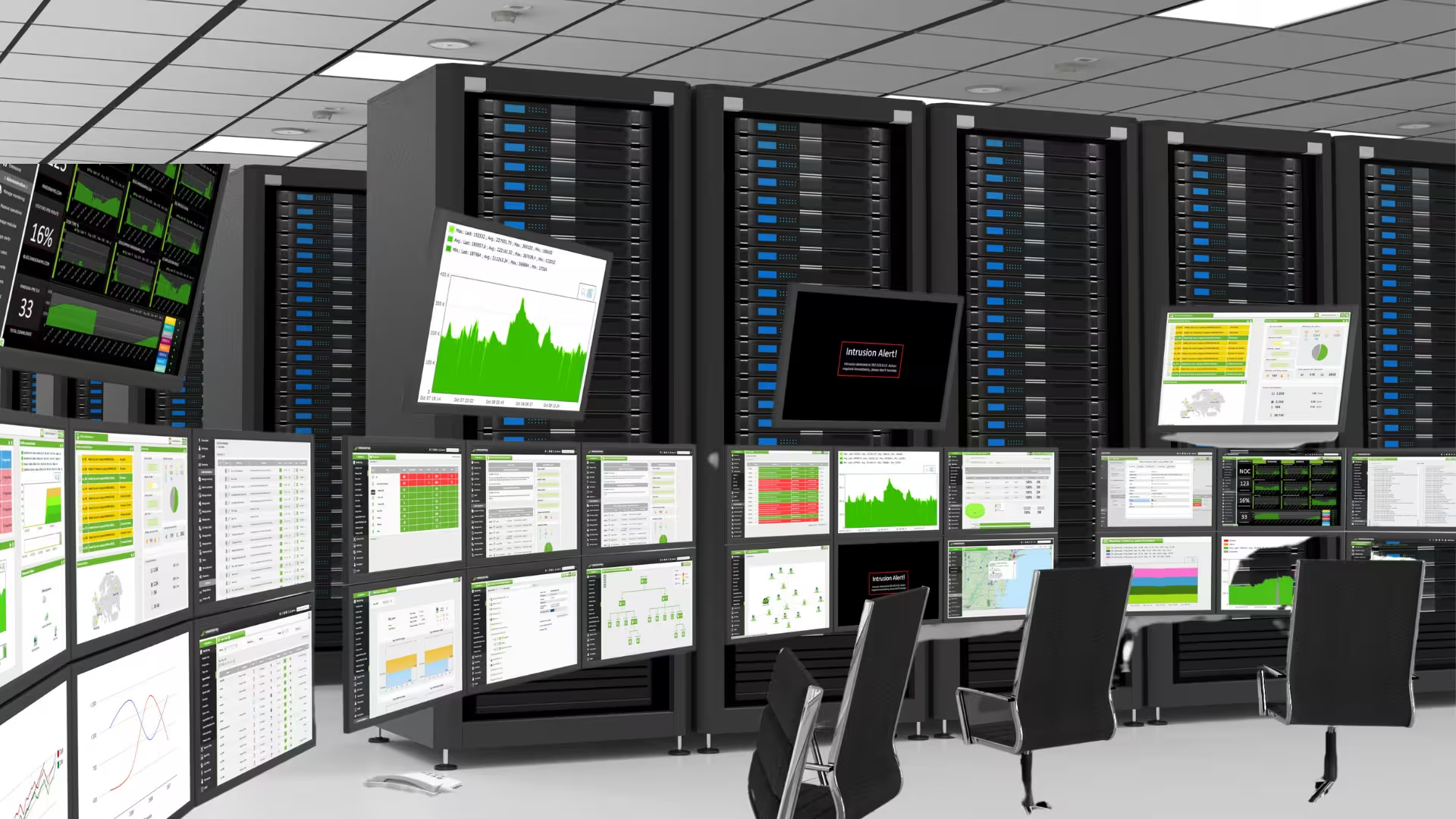
Centralized dashboards can provide facility operators with a clear overview of environmental conditions, sensor status, active alarms, historical trends, and other available system information from a common monitoring interface.
Historical data and trend logging can assist operations teams in reviewing changes in temperature and humidity over time, identifying recurring conditions, evaluating cooling performance, and supporting maintenance and operational analysis.
Remote monitoring and alarm notification can also be provided where supported by the selected system and permitted by the project's IT and cybersecurity requirements.
Environmental monitoring can be integrated with the Building Management System (BMS) or another compatible centralized monitoring platform. This allows environmental parameters and alarms to be coordinated with HVAC, precision cooling, power, leak detection, and other monitored systems.
Environmental monitoring is particularly valuable when coordinated with precision cooling systems. Temperature and humidity data from critical locations can provide operators with information to evaluate room conditions and identify areas requiring further investigation.
During commissioning, sensors and monitoring points should be verified to confirm correct identification, readings, alarm thresholds, communication, trend logging, and integration with the designated monitoring platform.
Perfect Solution Contracting provides integrated environmental monitoring solutions for data centers covering system design coordination, sensor selection, supply, installation, cabling, configuration, monitoring interfaces, alarm setup, system integration, testing, and commissioning in accordance with project requirements.
- Continuous temperature monitoring in data halls, server rooms, and technical areas.
- Relative humidity monitoring for critical IT environments.
- Strategic sensor placement according to room and rack layouts.
- Rack-level environmental monitoring where required.
- Airflow and differential pressure monitoring where specified.
- Door status and additional environmental inputs where required.
- Configurable warning and critical alarm thresholds.
- Centralized dashboards for system status and environmental conditions.
- Historical data and trend logging.
- Remote monitoring and alarm notification where supported.
- Integration with Building Management System (BMS) platforms where required.
- Coordination with precision cooling and HVAC systems.
- Sensor calibration and functional verification according to project requirements.
- Alarm, communication, integration, and commissioning tests.